Why reviews and photos matter, and why they mislead
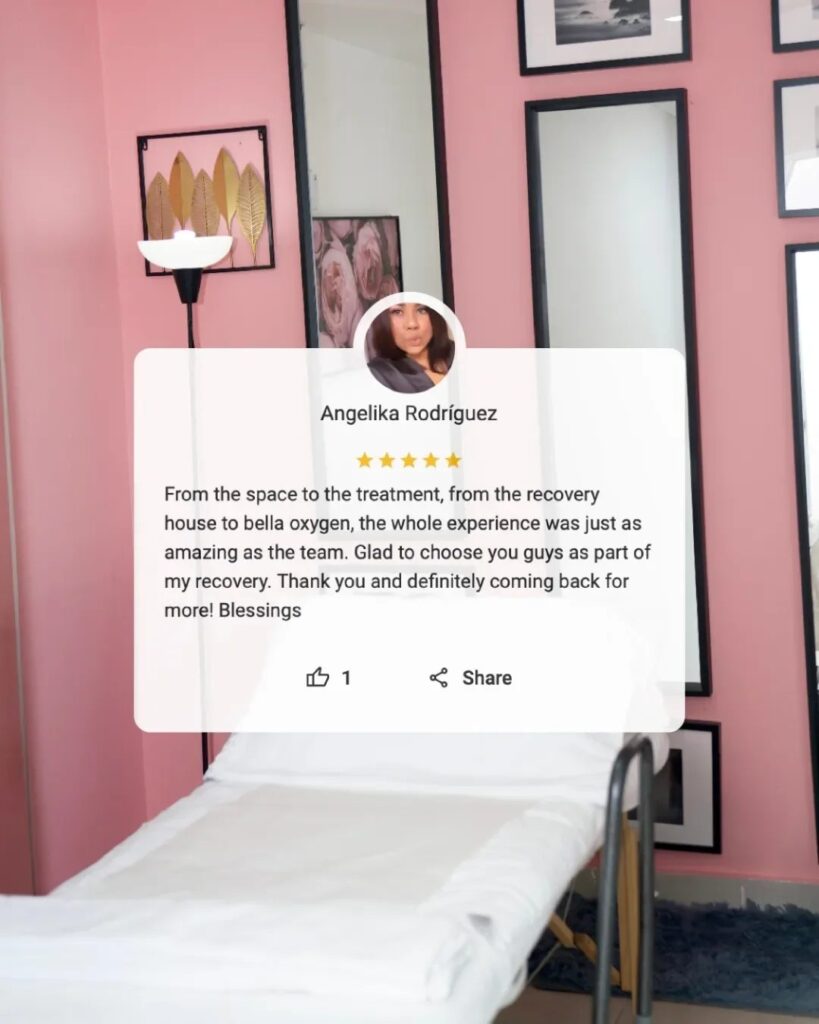
When choosing a hyperbaric clinic, online reviews and before-and-after photos are often the first things people look at. They feel concrete and personal in a way that clinic descriptions do not. A five-star review from someone who had your procedure feels like a recommendation from a friend. A dramatic before-and-after photo feels like proof.
But reviews and photos are also among the most easily manipulated and misinterpreted forms of information. Understanding how to read them critically helps you extract what is useful while discounting what is not. This guide covers how to evaluate both.
Learn more: Bella Oxygen, our treatment page, first session.
Reading reviews critically
Start with the overall pattern rather than individual reviews. A clinic with dozens of reviews averaging 4.5 stars or higher is generally a better sign than a clinic with three perfect reviews. Volume matters because it is harder to fake and gives a more reliable picture.
Read the actual text of reviews, not just the star ratings. Look for specifics: reviewers who describe the facility, the staff, the screening process, and their own situation in detail are more credible than those who write only “amazing, highly recommend.” Detailed reviews are harder to fabricate and more useful to you.
Pay attention to what reviewers mention about the medical aspects. Do they describe being screened before treatment? Do they mention staff explaining the process? Do they discuss realistic expectations? Reviews that touch on these topics suggest a clinic that takes the medical side seriously.
Be cautious of patterns that suggest manipulation: many reviews posted in a short time period, reviews with very similar wording, reviews from accounts with no other activity, or an absence of any critical reviews at all. Even excellent clinics occasionally receive less-than-perfect reviews. A complete absence of criticism can be as suspicious as an excess of it.
What negative reviews can teach you
Do not dismiss negative reviews outright. Instead, read them for what they reveal about the clinic’s operations. A complaint about long wait times is different from a complaint about being pressured to buy packages. A reviewer who felt rushed through screening is telling you something important about safety culture.
Also note how the clinic responds to negative reviews. A professional, non-defensive response that addresses the concern suggests a well-managed business. An aggressive or dismissive response, or no response at all, tells its own story.
Keep in mind that some negative reviews reflect mismatched expectations rather than poor care. A reviewer disappointed that HBOT did not produce dramatic results may have had unrealistic expectations going in. This is still useful information: it may indicate that the clinic does not set expectations well.
Evaluating before-and-after photos
Before-and-after photos are powerful, which is exactly why they require the most skepticism. Here is how to look at them with a critical eye:
- Check for consistency. Lighting, angle, distance, and background should be similar between the before and after shots. Dramatic differences in lighting alone can create the appearance of change where little exists.
- Look for timelines. Honest presentations include when each photo was taken. A before photo from the day of surgery and an after photo from six months later shows the combined effect of time, standard healing, and any complementary therapies, not the effect of one intervention alone.
- Consider selection bias. Clinics show their best results, not their average ones. The photos you see represent the top outcomes, not the typical experience.
- Watch for digital alteration. Overly smooth skin, inconsistent shadows, or warped backgrounds can indicate retouching. Reputable providers do not alter clinical photos.
- Ask about context. What else was the patient doing during recovery? Compression, massage, time, and the surgeon’s work all contribute to the visible result. Attributing everything to one therapy is misleading.
What photos cannot tell you
Even honest, unaltered before-and-after photos have inherent limitations. They show appearance, not the full recovery experience. They do not show how the patient felt, whether there were complications, or how the result evolved over time. They capture two moments, not a journey.
Photos also cannot establish causation. If a patient had HBOT and healed well, the photos do not prove HBOT caused the good outcome. The patient might have healed equally well without it. This is not an argument against HBOT, it is a reminder that photos are illustrations, not evidence.
When a clinic presents before-and-after media, the responsible framing acknowledges these limitations. Language like “individual results” and “results vary” is not just legal protection, it is honest communication. Be wary of presentations that imply the photos prove the therapy works.
Better sources of information
Reviews and photos are a starting point, not a complete evaluation. More reliable information comes from:
- Direct conversation with the clinic. Ask the hard questions about screening, protocols, staffing, and expectations. The quality of answers tells you more than any review.
- Your surgeon. If you are post-operative, your surgeon’s opinion of local hyperbaric providers carries more weight than anonymous reviews.
- A facility visit. Seeing the chambers, meeting the staff, and observing the operation firsthand is the best single evaluation you can do.
- Published evidence. For questions about what HBOT can actually do, peer-reviewed research is more reliable than testimonials.
Using reviews wisely
Reviews and before-and-after photos are useful when read critically and in context. They can reveal patterns in patient experience, suggest questions to ask, and give a general sense of a clinic’s reputation. They cannot tell you whether a therapy will work for you, whether a clinic is medically sound, or what your outcome will be.
Use them as one input among many. The most important evaluations, direct questioning, facility visits, and professional medical advice, require more effort but yield far more reliable conclusions.
Have questions about hyperbaric therapy?
Message Bella Oxygen on WhatsApp to discuss your situation.